|
LIBERTY,
DEMOCRACY AND NATIONAL RECONCILIATION FOR LAOS
Intervention by Mme Vanida Thephsouvanh, president of "Mouvement
Lao pour les Droits de l'Homme"

Press conference, European Parliament, June 13th 2002
 |
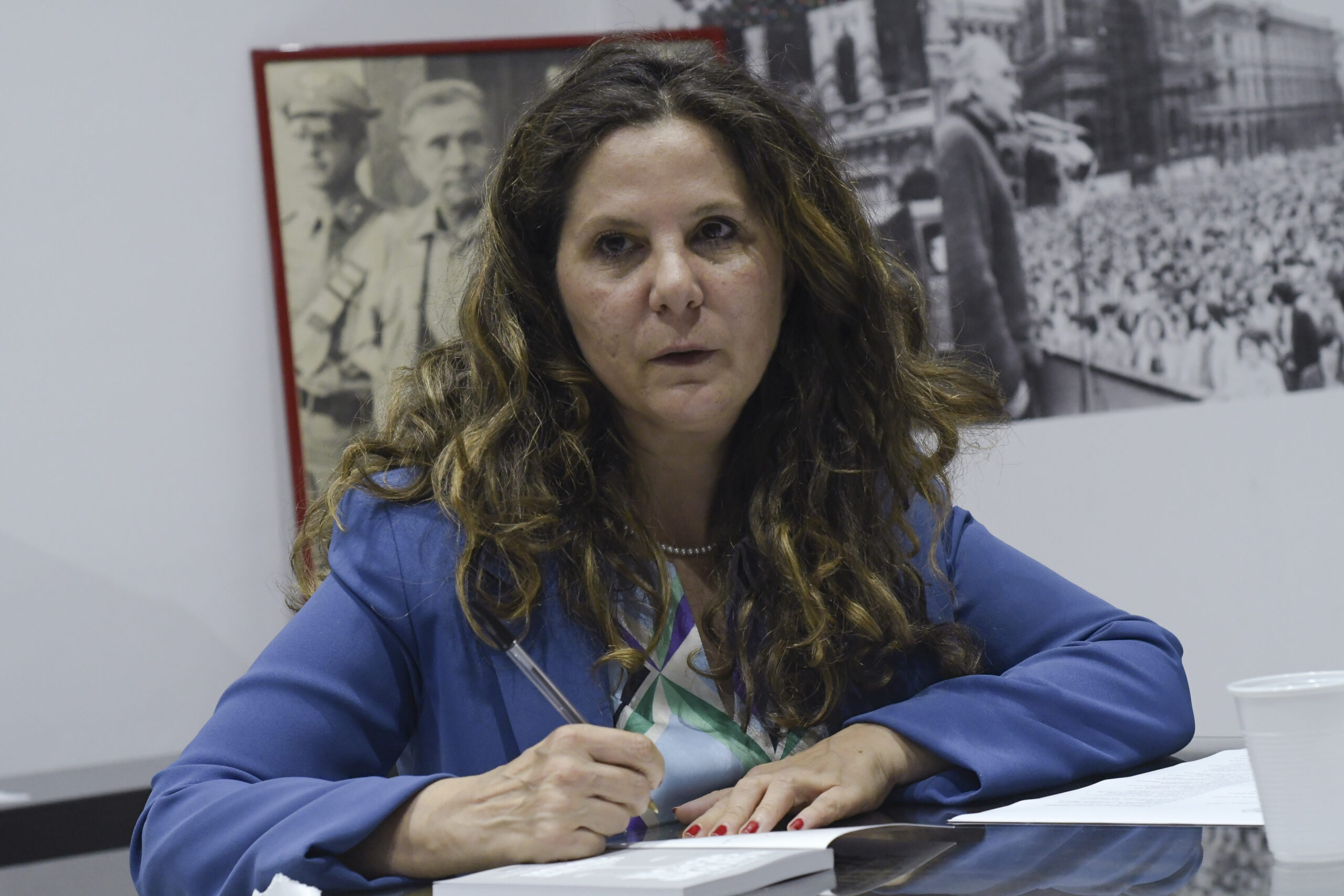
| from right to
left: Olivier DUPUIS, MEP, radical and Mrs Vanida S. THEPHSOUVANH,
President of the Lao Movement for Human Rights |
Last year, two important
events occurred between the European Parliament and the government of
Laos, giving great hope to Lao people inside Laos :
- the first event was the resolution voted on February 15th 2001 by the
European Parliament, calling the Lao government to realise democratic
changes, respect of human rights and national reconciliation,
- the second event was the pacific demonstration and the arrest, on October
26th 2001 in Laos, of 5 members of the Transnational Radical Party, among
them a Member of the European Parliament, Mr Olivier Dupuis - present
here today with us - an event that led to a resolution voted by the European
Parliament on November 15th 2001, condemning firmly the repressive régime
in Laos and asking the Lao government to respect, among other things,
clauses included in Cooperation Agreement signed with the European Community,
as well as all civil and political rights written in the Universal Declaration
for Human Rights.
After each resolution of the European Parliament, we, Lao Movement for
Human Rights, declared that
1- we wanted to be confident in the desire of the European Parliament
and the European Union to consider as urgent and important desperate calls
from people inside Laos, people without voice and without rights since
too many long years,
2- we would remain constantly vigilant concerning the application or the
non-respect, by the LPDR, of the conditions stated in the Cooperation
Agreements between the European Union and the Lao government.
Today, three members of the unique Party in the Lao National Assembly
will be received by the European Parliament. The Lao Movement for Human
Rights takes this opportunity to observe that
- the Lao government continues to ignore its own Constitution, continues
to ignore its own laws, continues to violate the Universal Declaration
for Human Rights and goes on not respecting clauses signed in the Cooperation
Agreements with the European Union,
- Laos remains under the control of an One Party State. The last legislative
elections held in February 2002, without surprising anyone, resulted to
the election of 108 members of the unique Party in the National Assembly
- for 109 seats -, the only person who is not member of the Lao People's
Revolutionary Party, having faithfully served the Party for more than
30 years.
The last reports from Amnesty International published in May 2002 and
from the American State Department published in March 2002, confirmed
that fundamental freedoms are still forbidden in Laos:
- Punishment camps with tortures and ill treatments still exist. Three
well- known political prisoners were sent to one of these camps for having
made an opened letter asking for democratic changes in 1990. One died
in 1998 for inhuman treatment. Not a single international organisation
for human rights has ever been able to visit these camps,
- Each pacific call and demonstration for democratic reforms in Laos has
been crushed and followed by massive arrests and disapearances. Despite
pressing questions from the European Parliament and from international
organisations for human rights, we still have no news of persons who were
arrested and who disapeared after their pacific march on October 26th
1999 and November 15th 2000, among whom Thongpaseuth Keuakoun, Sengaloun
Phengphanh, Bouavanh Chanmanivong, Khamphouvieng Sisa-at, Keochay and
Phommachanh Phommarath,
- Press and media are still under the absolute control of the government,
- Religious minorities are still violently harassed. Christians are forbidden
to go to their church and forced to renounced to their religion. Several
churches were forced to close by local authorities. Up to this day, at
least 50 christians are still in prison, isolated in inhuman and degrading
conditions, for having refused to sign the renouncement of their faith,
- Ethnic minorities are moved from the mountains into the plains. Ethnic
minorities are often religious minorities and are known for their anti
communist conviction.
- Corruption, drugs, prostitution of minors and the Lao People's Revolutionary
Party remain desperately inseparable from the Lao government,
- The Lao leaders have become experts in the art of soliciting - and obtaining
- international aids. They have become specialists in the art of launching
campaigns against poverty, campaigns in favour of rural development, campaigns
for women and children's rights, campaigns for the end of the culture
of poppy, campaigns against deforestation, campaigns in favour of reforms
in the institutions, administration and laws. The Lao leaders even signed
Cooperation Agreements with clauses demanding human rights respects and
democratic changes in Laos while they perfectly know that they have no
intention to respect human rights and democratic values described in these
clauses.
- For 26 years, the international community has given almost 400 millions
dollars aids - per year - to the Lao People's Democratic Republic. The
European Union, alone, has poured about 130 millions dollars to Laos,
millions of dollars that have not contributed to the rural, social, commercial
or democratic development in Laos, millions of dollars that have helped
strenghtening corruption and the unique Party in Laos,
millions of dollars that have allowed the communist leaders to declare
to Lao people that donor countries support their regime,
Lao people that cannot understand why European countries, claiming as
human rights and democratic values promotors, persist to help a government
that is absolutly and permanently anti-democratic.
Although we are convinced that only democratic reforms and the end of
the totalitarian regime can pull Laos out of corruption and poverty, we
are not asking to stop aids to the LPDR.
Today, we are here to call on Members of European Parliament to make sure
that their two resolutions voted last year do not become useless, but
are fully applied to relations between the European Union and the LPDR.
Today, we are here to implore the European Union to give these aids only
if every clause in the Cooperation Agreement is respected.
Today we are here to implore the European Union to respect the suffering
of a repressed people.
Today, we are here, to implore the European Union to have the will of
not being considered, by the Lao people, as accomplice with a repressive,
totalitarian and corrupted régime, but as true defender of a democracy
that should be gobalised.
|