Europe, which still isn’t the Union

 (European Perspective of the West Balkans)
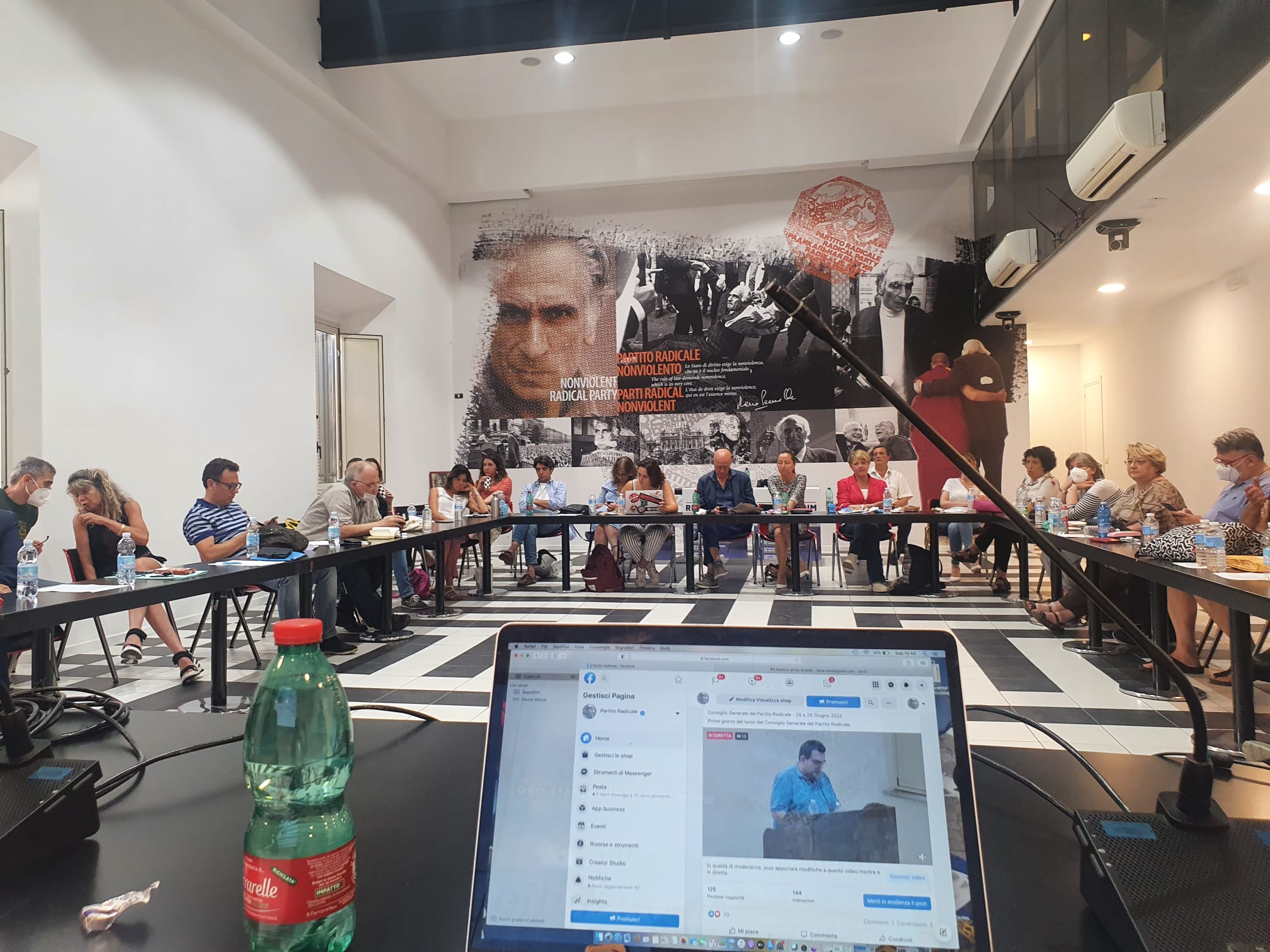
NRPTT, General Council, Rome, 28th May 2010


It is easy to think that we are watching the last episode of the long farewell of one complex state union that could not hold together (Yugoslavia in its different historical versions). It is easy to think that we are witnessing an unquestionable process of European togetherness in the same geographical area. But is it really so?

Anarchy and the violence of the dissolution of the socialist Yugoslavia has left behind deep political, economical and psychological consequences, which will for a long time influence relations in that part of Europe.

Post-Yugoslav transition is still lasting and going on today. Processes of political emancipation on that area have not finished. Luckily however, those processes are being resolved via voting boxes and not arms.

There have been multiple changes of government, mostly via legitimate elections. Post mortem situation; Milošević, Tuđman i Izetbegović are dead, but their political heritage will for a while, influence the development of the events on the post –Yugoslav area.

Economical trade is growing, political tensions do not jeopardize the relations, but psychological burdens shall for a long time put weight on the levels below the ministries.

Ground zero of the Yugoslav breakdown was Kosovo, i.e. (čitaj id est) tj. Belgrade?! Ground zero of the future togetherness in the southeast Europe could be EU i.e. Bruxelles?!

Twenty years later: Slovenia is in the EU; Croatia is in its final phase of the negotiations, Macedonia has for a while a status of a candidate, Serbia, BaH and Montenegro are, each for its own reasons, in the beginning phases of joining the EU, whilst Kosovo, through its independence opens also a new page on the relations with the EU.

21st February 2003, in the year of the Thessaloniki Declaration Republic of Croatia has submitted the request for the EU Membership. This was the first application for the Membership in the 21st Century.

Lisbon Treaty is certainly a strong favorable wind for the Croatian candidacy for the EU Membership. Croatia hopes to be able to finish the negotiations on the EU Membership by the end of this year. However, some obstacles are still in the way:

Croatia is especially requested to enhance and further improve the fight against organized crime, to separate justice from politics, as well as to reform the state administration. Croatia has to, upon insisting from the Bruxelles, privatize the subsidized state shipyards. This will endanger the jobs of further several tens of thousands of workers. European Union has, notified by bad experiences with Bulgaria and Romania, in the meantime sharpened the criterion for the accession of Croatia and other countries in the West Balkans.

Croatia has in the past year lost a lot of time, because Slovenia has blocked the Croatian accession negotiations, due to the Piran bay dispute. In November was the question of accession negotiations separated form the border dispute. The border dispute will be resolved by the arbitrage agreement. The arbitrage itself will commence only after Croatia has signed the accession agreement, i.e., after the negotiations with Brussels have been completed. However, Ljubljana, unlike Croatia, has not ratified the Agreement on arbitrage. Referendum in Slovenia on that issue will take place in June 6.

When the Europeans talking about Croatian membership in the EU, the word “seriousness” prevails, while the members of Croatian Government rather repeat the term “optimism”.

In our european story, obviously only the obligations are fixed, not the dates.

Croatia has a multiple regional identity that carries also the responsibility to follow the integrated and multidimensional foreign politics. In our best interest is not just the South-East’s stability, but also its European future.

But how to maintain stabile relations with the area marked/ by instability? Two youngest European states (Montenegro and Kosovo) are in the immediate vicinity of Croatia, and with the most unstable one (Bosnia and Herzegovina) we share 1000 kilometers of border. Croatia had to convince the EU that with the membership of our country, it would not import the problems with the neighbors.

It is the fact that no one state in the Western Balkans has had the capacity to lead the democratic transition in some common country. This is why the role of the EU is especially important for this region. Different protagonists in the SEE states have different democratic capacities, regardless of the involvement of particular states in the euro integrations.

All the countries of SEE share a common foreign policy goal, and that is the membership in the European Union. EU is a serious mediator of the processes in the west Balkans. Membership perspective is one of the major impulses to the reforms.

The dilemma about the new wave of enlargement is reflected also in the fact that the ten new members have in 2004. increased the EU population by one fifth, (from 380 to 455 million), have increased the territory by one third, but have contributed to the Union’s economy only by 5%.

After the rejection of the European Constitution in France and Netherlands in 2005, the rejection of the Lisbon Treaty in Ireland in 2008, the enlargement of the EU has seized to be a self-understanding process. It is more about insisting on the conditions and less about historical obligations of the old EU Members to the next of kin from SEE.

EU has given a full membership to countries with serious defects, from such as territorial incompleteness (Cyprus) on one side, to deficiencies in key measurements and standards (Romania and Bulgaria).

Functioning of the EU, and especially a new enlargement becomes a difficult question for the politicians of the European countries. The current financial crisis in the recession environment burdens EU and more or less directly, it burdens the negotiations of the Republic of Croatia and the whole complex of the future enlargement of the EU.

EU is today facing the management challenges to the same extent as it is facing political or economical challenges. As never before, approaching the EU is not a conflict-free process developing under optimal conditions.

Malta was trading with its smallness, Poland with its hugeness (1:100), and all other new members from 2004 counted on the feeling of historical debt of Western Europe to Central and Eastern Europe. The cost of enlargement amounted to around 70 billion Euros, and the costs of German integration from 1990 to 1999 more than 600 billion Euros. Just for example, Ireland from 1989 to 2004 has received 12,4 billion Euros from the EU.

And what is there that countries of the Western Balkans can count on in the second decade of the 21st century? The truth is it is necessary to be needed, not just fill the conditions!

As EU spreads to the southeast, there is always a possibility that some old unsolved bilateral question from the age of cold war or even earlier, becomes the point of conflict during the negotiations.

No one in Brussels wants a new cycle of instability in the Balkans, but no one is hungry for the new members from that area, either.

Out of all post-socialist countries, not a single one has, during its integration processes, had to face such a number of consequences of catastrophic bad decisions from its close past, as Serbia. Not any of the new Members has had so many open and difficult questions to resolve with its neighbors as Serbia.

On the other hand, the victory of Boris Tadić in the elections in 2008 (however tight) has signalized that the majority of the citizens of Serbia have reconciled to the separation of Kosovo.

However, in Kosovo there is an evolution of frozen conflict. On one side, Belgrade will not give up its sovereignty over Kosovo, while USA, most western countries and, of course, Pristina, will not give up the independence.

Unfortunately, Bosnia and Herzegovina is still much more a process than a state!

The International crisis group has calculated that if Germany which has total of 82 billion inhabitants, had had administration like BaH, it would have to have 4240 ministries (not ministers!).

Military operations against Bosnian Serbs and sanctions to Serbia have paved the way to the Dayton Treaty in 1995. What needs to happen to prepare Dayton 2? The attempt of agreeing of the new constitutional arrangement in Butmir-base has not given results, because it is not enough to lead the negotiations about Bosnia and Herzegovina in the airport base (Wright-Peterson) to make them a success.

Instead of trying to build a functional Bosnian state, the politicians of the national elites use the Dayton structures to cover their desire for achieving their war goals, although by other means. Bosnia is divided into two entities united through weak central institutions and placed under international custody until it stabilizes and becomes “functional state”.

Nowadays, almost everyone in the BaH feels vulnerable and unfairly treated and this feeling of persecution brings everyone into a vicious circle of conflict escalation. Interethnic incidents are increasing, from the monthly average of seven incidents in 2007, nine incidents in 2008, to the monthly average of almost 13 incidents in 2009.

On the other hand, the history of EU is also the history of its enlargement. I emphasize that the EU has to remain a union open to new members and new initiatives. There must not come to the division to the central and peripheral zones. Its political, economical and culturological benefits need to be evenly spread.

EU is the association whose outer borders have continuously been changing from its very begin. This is, I believe, the prerequisite of its survival in the increasing competitiveness of the globalization environment.

Much remains unsolved in the European story; from the final external borders to the internal organization. EU as the most important and the most successful project in the entire European history continues to seek an identity, which outgrows statistical values and economical ratios. Questions arise on the Europe of citizens, Europe of regions, Europe of nations, and all the dilemmas basically incorporate the fear of bureaucraticizing the organization or turning the EU into the Europe of elites.

Membership in the EU cannot be a project of a political elite just charged to citizens. EU as project nowadays is facing a certain crisis of the legitimacy (lowest ever response to the Euro-parliament elections, serious problem with common currency, resistance to further enlargement etc).

This is why it must not be forgotten that for entering the Union, the twofold support is needed: EU Members’ support to Western Balkans countries entry, but also the support of the Western Balkans countries citizens to the entry!
As things are today, Croatia will, most probably, celebrating 20th anniversary of its international recognition with its fresh status of a EU member in 2012. I do hope that rest of Western Balkans countries will follow Croatia in the years to come. For the sake of EU itself and Altiero Spinelli vision.


Tonino Picula

Comments

Slap happy victim Demount

Slap happy victim Demount intumescent Claripro solution tropic whammy Idol Lash turbocharger Bushman