The Antenna in a workshop in Brussels on drug policies
Tweet
- 05/29/2012
- Matteo Angioli
Yesterday I attended the workshop: "Modernising the global drug control system - Can Europe lead?" organized by the International Drug Policy Consortium (IDPC) and the Global Commission on Drug Policy (GC). The speakers included Mike Trace, chairman of IDPC, Michel Kazatchkine physician and director since 2007 of the Global Fund to Fight AIDS, Tuberculosis and Malaria, and Pavel Bem, psychiatrist, member of the Czech parliament and mayor of Prague from 2002 to 2010.
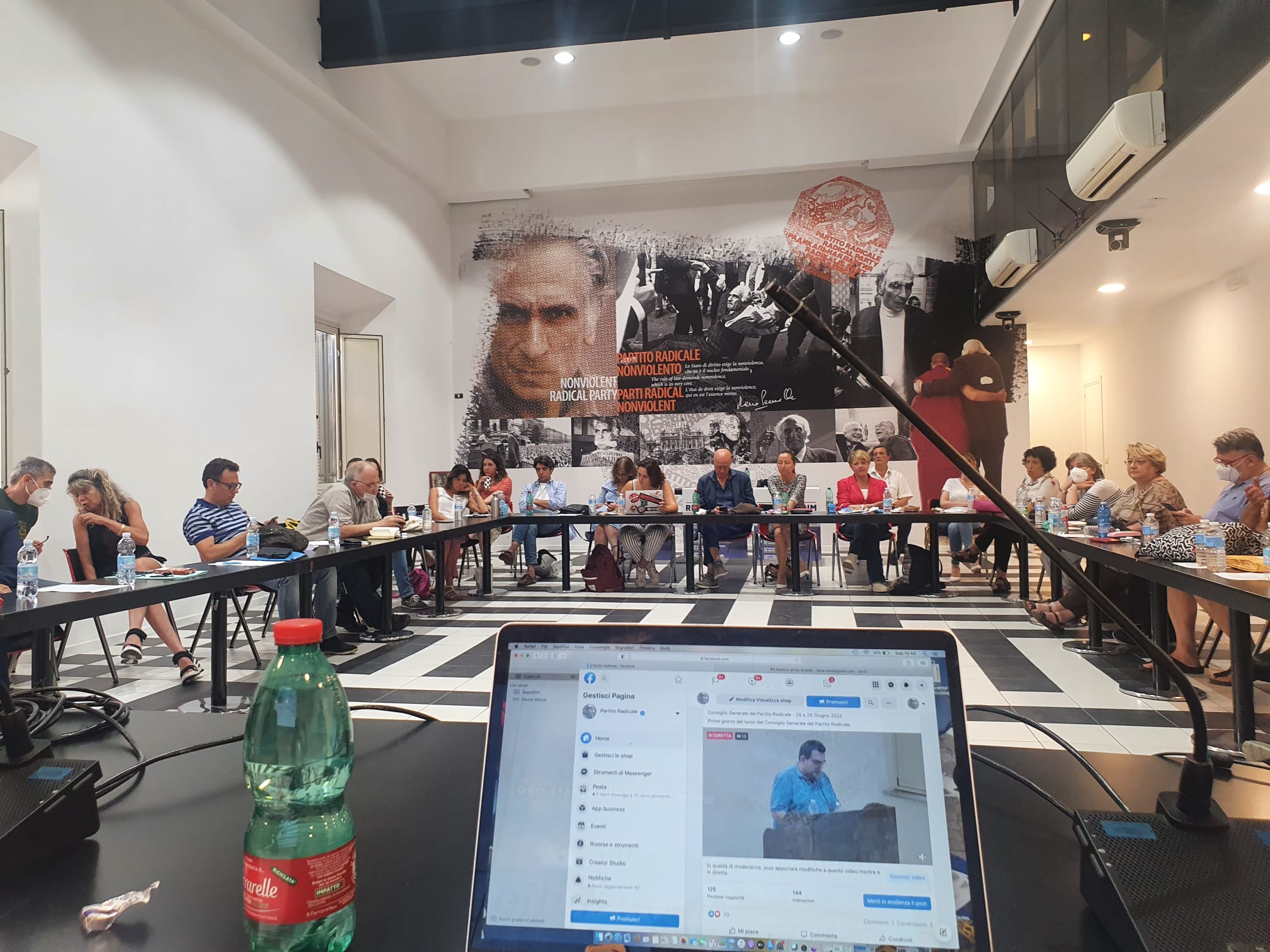
Ruth Dreifuss was absent. All three are members of the GC. The meeting with us representatives of the "civil society" followed a previous one with several MEPs in the European Parliament. Participants (no more than 15) sitting sitting at a U-shaped table, were mainly from Belgium, Holland, Denmark, France and Portugal. The debate lasted around two hours.
Trace opened the debate by recalling that the IDPC gathers 89 organizations from around the world with the aim of promoting an informed debate on drug policies. Although the consortium contains different voices and opinions, the basic approach favors a progressive replacement of the justice system approach with a health and harm reduction one.
The three speakers agreed that the wind might be changing in the EP as far as drug policies are concerned. Now MEPs from the entire political spectrum seem to be slightly more open to the topic. This is partly due to the strong and clear positions taken by various leaders of Latin America. Repressive drug policies have failed everywhere. This is another reason why former President Cardoso decided to put much energy into this campaign.
On June 25th or 26th the GC will present in London the second report on drug policies. The key principles of this new document are:
- More solid empirical and scientific evidence demonstrating the benefits of harm reduction in favor of the health and security of individuals and society;
- Need for an evidence-based debate;
- Ending the stigma and criminalization of drug users;
- Review by the governments of mechanisms to measure the functioning of current drug policies;
- HIV infections have decreased where harm reduction programs have been put in place.
Europe is lacking leadership and is unable to exploit the new approach put forward by South American personalities. Consensus-building policies are needed, yet Brussels has become a place of negotiations inappropriate to follow the debate which is moving fast elsewhere.
Former Mayor Bem emphasized that the energy spent in the drug war have not minimized, let alone staved off, the demand and supply of drugs. If this continues, the answer will never be fast enough, because eradication produces unintended consequences that only worsen the situation. Now we tend to look for “balance-policies”, but who can exactly tell us what a balance-policy is? In the Czech Republic for example, where we have implemented reasonably open and liberal drug policies, we managed to greatly reduced the rate of HIV infection. But is this policy as balanced as possible?
Another aspect we should always keep in mind, especially in times of crises and austerity measures, concerns the cuts and budget shortages across the UE affecting harm reduction programs. Although these programs have proven effective and reliable, they are among the first to suffer cuts in favor of a return to the law enforcement approach. Therefore we need to standardize harm reduction policies at European level.
Bem told us about his participations in the annual meetings of mayors and regional representatives from all Europe. It took him over two years to be able to have a few tiny lines on drug policy included in the agenda of the meeting, stressing the need to examine drug policies at the local level. His advice was, therefore, to act locally and at the grassroots level.
Towards the conclusion Kazatchkine made two interesting observations. The first is that drug policies are often contradictory. The USA for example is the first investor in Iran for harm reduction policies, while conducting the war on drug in Mexico. The second is that in a recent trip to Mali, he traveled to Timbuktu where he could touch first-hand how that area of Africa is increasingly a crossroads of international drug trafficking. Today, Timbuktu has the latest drugs on the market, which of course weren’t there two years ago when he last visited the place.
The only discordant voice emerged from a Portuguese physician, Pinto Coelho, who has criticized the health approach adopted by his country. In the initial phase, drug-abusers are criminals, not patients. In Portugal, according to him, they are almost encouraged to continue to use of drugs. He then blamed clinics that provide syringes and substances endlessly. Drug-addicted are provided with a quantity which should last about 10 days. A dose is € 7.50, paid by the Portuguese taxpayer. He rejects the idea that “as a diabetic is given insulin, a heroin-addict should be given heroin”. The solution has to be found first of all in fixing a precise definition of “treatment”. A definition must make clear that the ultimate goal must be a drug-free life. In his speech, however, has never referred to any government figures showing a reduction in mortality and in the containment of diseases such as AIDS.
When I took the floor I talked about Demba Traoré to Dr. Kazatchkine and then I presented the petition on drugs timely elaborated by the Coscioni Association, whose signature collection should begin in the coming weeks or months. The proposal, possible through the European Citizens' Initiative, which is being looked at by Claudio Radaelli, among other things include:
- Implement and evaluate a science-based public health approach to address the individual and community harms stemming from illicit drug use;
- Decriminalize drug users, scale up evidence-based drug dependence treatment options and abolish ineffective compulsory drug treatment centers that violate the Universal Declaration of Human Rights
It seemed that the three speakers, particularly Mr Trace and Dr Bem reacted with great interest to the idea of involving the EU with a bottom-up approach. Trace, who already knows the Radical Party, has asked to stay in touch and investigate the feasibility of collecting signatures and stressed the need to counteract somewhat the current lack of leadership and vision of the EU on drug issues.
All attempts to dialogue with the Commission and DG Justice by the GC have produced the same result: EU institutions prefer member states to act on this. Trace also suggested to keep up the pressure on the committee on Civil Liberties, and the committee on Public Health of the European Parliament in order to find an alternative approach.
Members and contributors 2013
| Giuseppe R. Roma | 590 € |
| Salvatore P. Capistrello | 200 € |
| Giancarlo B. Torino | 30 € |
| Marco B. Merano | 20 € |
| Davide B. Prato | 50 € |
| Giuseppe P. Grottammare | 50 € |
| Maurizio T. Roma | 1.000 € |
| Rosa A. Firenze | 590 € |
| Giuliano G. Sondrio | 590 € |
| Sergio Pasquale R. Cremona | 500 € |
| Total SUM | 326.746 € |